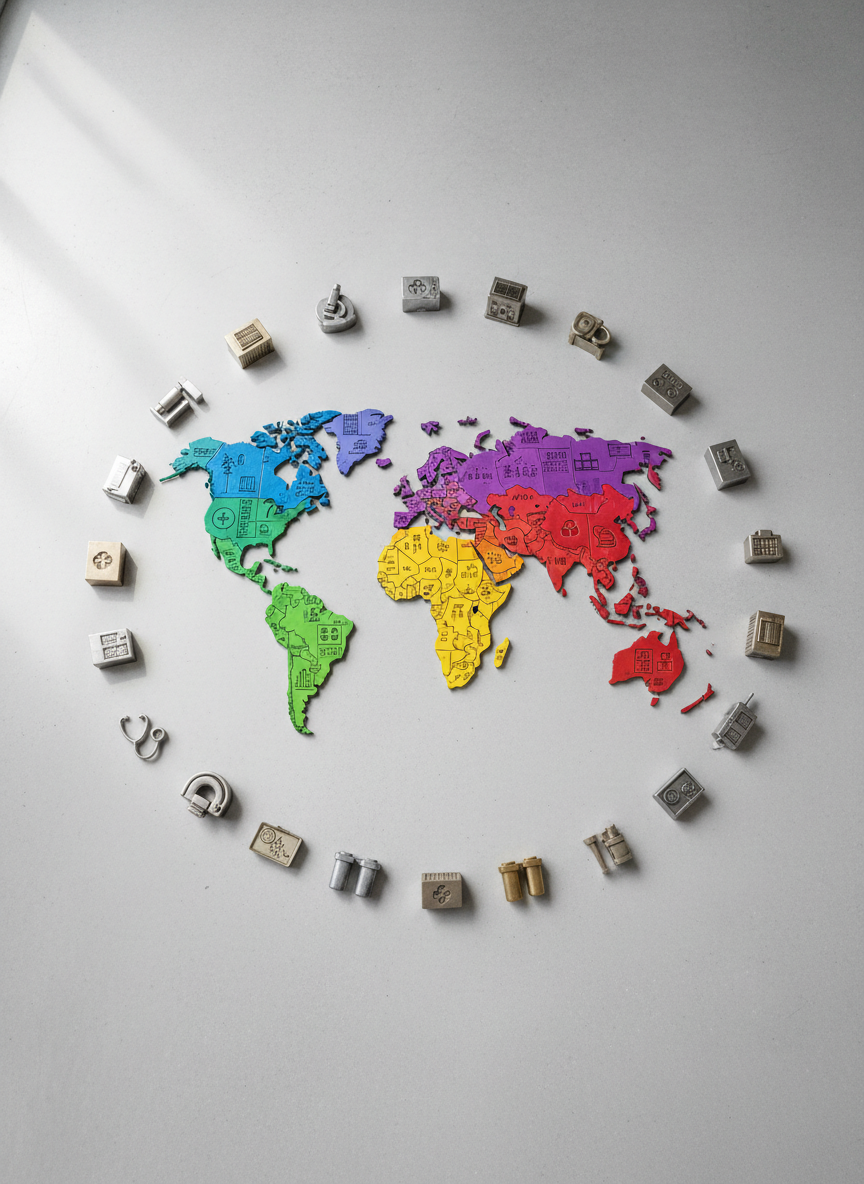
A detailed overhead photographic view of a world map made from colorful, interlocking geometric tiles, each tile representing a region’s health system infrastructure such as clinics, laboratories, and supply hubs. Around the map, small, precisely arranged icons of medical equipment, solar-powered cold chain boxes, water purification units, and digital tablets suggest investments in resilient systems. Soft, diffused daylight from an unseen window creates gentle highlights on the matte surfaces and subtle shadows between tiles. The composition is clean and modern, with sharp focus across the frame and ample negative space around the map. The mood is professional yet optimistic, conveying global connection, equity, and coordinated health strengthening without any human figures or text.

People-First Systems

Partnering with countries to build resilient, equitable health systems that endure beyond individual projects.

About

Our People-Centered Investment Thesis

We prioritize investments that strengthen people powering health systems—leaders, providers, communities—using evidence-based frameworks, political economy analysis, and co-designed implementation pathways to align financing, governance, and service delivery for lasting, equitable impact.
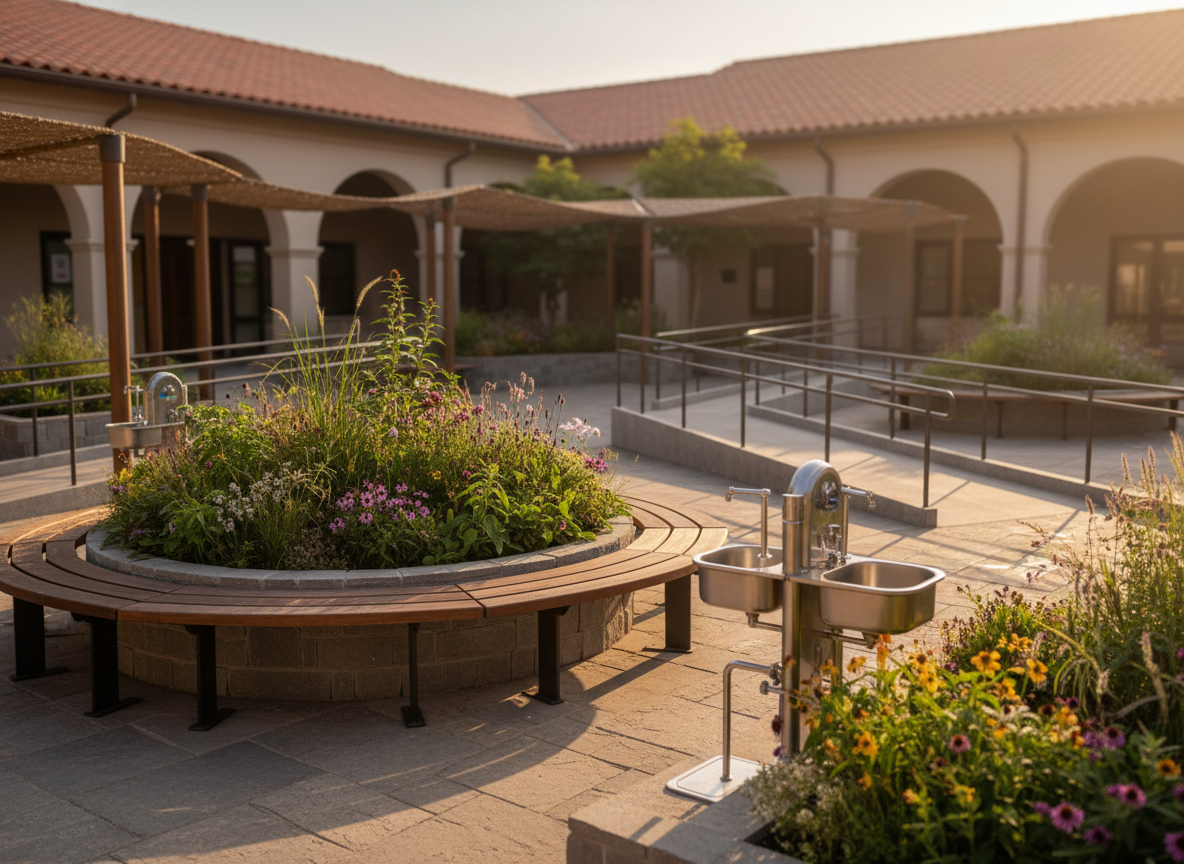
A richly detailed, photographic scene of a community health hub courtyard represented through symbolic objects: sturdy benches, shaded waiting areas, and neatly arranged handwashing stations with metal basins and soap dispensers. A central circular planter overflows with vibrant native plants, surrounded by clear directional markers, ramps, and railings indicating accessibility and inclusion. Warm late-afternoon sunlight streams in at an angle, casting elongated, gentle shadows and highlighting the varied textures of stone, wood, and greenery. Shot at eye level with moderate depth of field, the foreground elements are crisp while outer buildings softly blur. The mood is welcoming and dignified, emphasizing equitable, community-centered health spaces and everyday resilience without showing any people or signage.

Testimonials

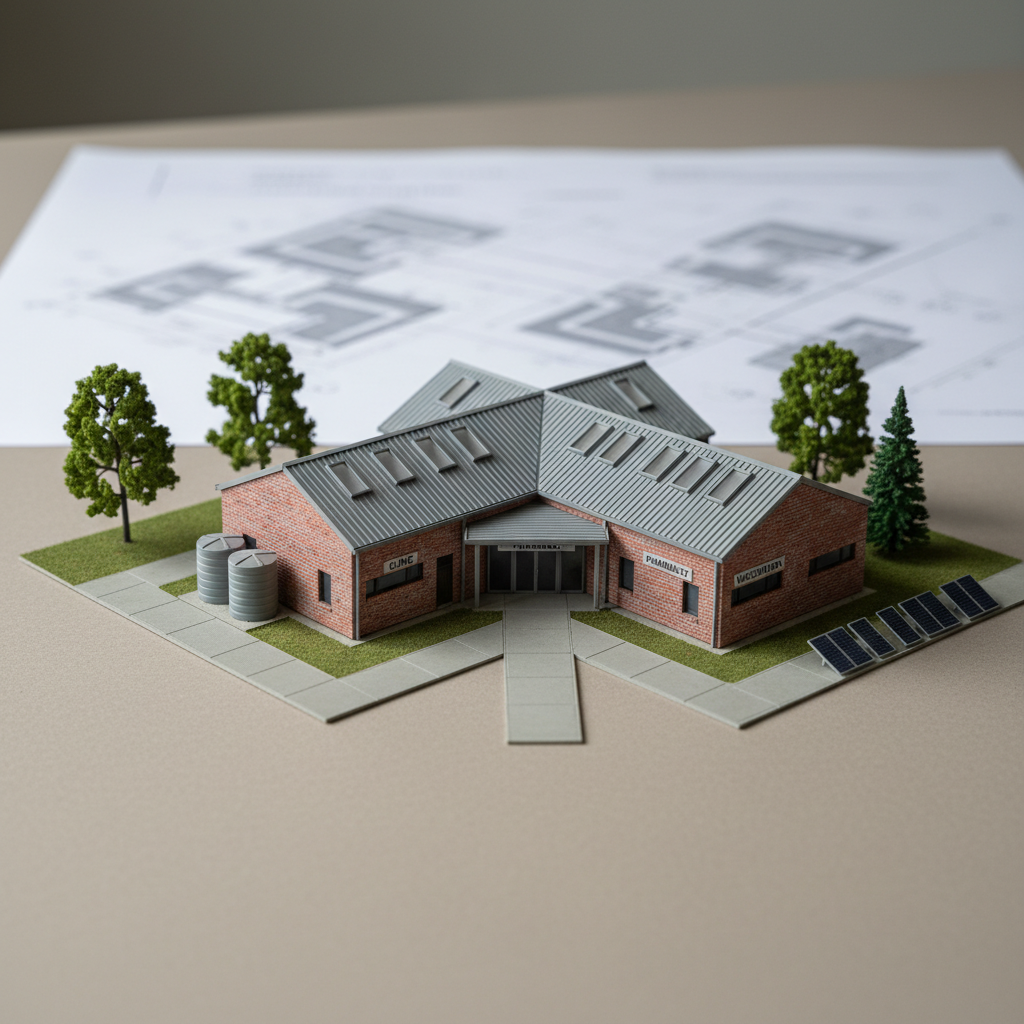
A highly detailed, photographic close-up of a modern rural health facility model, constructed as a realistic miniature with textured brick walls, a metal roof, and clearly marked pathways leading to separate clinic, pharmacy, and vaccination areas. Surrounding the building are tiny model trees, water tanks, and solar panels suggesting sustainable infrastructure. The setting is a neutral studio tabletop with a softly blurred blueprint of a larger regional health system in the background. Controlled soft studio lighting from the upper left creates gentle shadows that emphasize depth and structure. Captured at eye level with shallow depth of field, the image feels precise, professional, and forward-looking, symbolizing investment in physical health infrastructure and access without depicting any people.

Hope D.

Resilient Generations helped our ministry align investments with frontline needs, strengthening primary care and community trust in under a year.

A photographic, wide-angle view of a sleek operations command table displaying a network of interconnected health system data on multiple glowing transparent screens. The central translucent panel shows a stylized globe with illuminated pathways connecting regional health facilities, warehouses, and laboratories, depicted as small, abstract 3D structures. Additional panels show graphs, logistics flows, and surveillance indicators, all as purely graphical shapes with no text. Cool, focused LED lighting creates reflections on the glossy table surface, while the background remains softly out of focus. The composition uses the rule of thirds, with the main screen slightly off-center. The atmosphere is analytical, calm, and efficient, illustrating coordinated, data-driven investment in global health resilience without any human presence.

Hope D.

Their people-centered lens turned a fragmented donor portfolio into a coherent strategy that advanced equity and measurably improved access for rural women.

A detailed overhead photographic view of a world map made from colorful, interlocking geometric tiles, each tile representing a region’s health system infrastructure such as clinics, laboratories, and supply hubs. Around the map, small, precisely arranged icons of medical equipment, solar-powered cold chain boxes, water purification units, and digital tablets suggest investments in resilient systems. Soft, diffused daylight from an unseen window creates gentle highlights on the matte surfaces and subtle shadows between tiles. The composition is clean and modern, with sharp focus across the frame and ample negative space around the map. The mood is professional yet optimistic, conveying global connection, equity, and coordinated health strengthening without any human figures or text.

Hope D.

What stood out was how deeply they listened to providers and patients, then translated insights into realistic policies and budgets we could implement.

A richly detailed, photographic scene of a community health hub courtyard represented through symbolic objects: sturdy benches, shaded waiting areas, and neatly arranged handwashing stations with metal basins and soap dispensers. A central circular planter overflows with vibrant native plants, surrounded by clear directional markers, ramps, and railings indicating accessibility and inclusion. Warm late-afternoon sunlight streams in at an angle, casting elongated, gentle shadows and highlighting the varied textures of stone, wood, and greenery. Shot at eye level with moderate depth of field, the foreground elements are crisp while outer buildings softly blur. The mood is welcoming and dignified, emphasizing equitable, community-centered health spaces and everyday resilience without showing any people or signage.

Hope D.

Because they invested in local leadership and mentoring, our programs remained resilient through funding shifts and public health emergencies.